
In 2025, Facebook (Meta) remains one of the most powerful advertising platforms worldwide with over 2.1 billion active advertisers monthly and an estimated $130+ billion in annual ad spend across Facebook, Instagram, and Audience Network. Despite this mature ecosystem and extensive documentation, even experienced media buyers continue to face permanent restrictions on their Facebook Ad Accounts. This not only disrupts campaigns but also impacts revenue, client trust, and long-term account health.
This article explains why seasoned professionals still encounter account bans, identifies key causes, and provides actionable insights to protect your Facebook Ads accounts.
1. Strict and Evolving Facebook Advertising Policies
Meta’s ad policies change frequently, often without prior notice. Even expert media buyers can be caught off-guard when:
- Policy wording shifts subtly
- New categories (e.g., health claims, financial products) are reclassified
- Machine learning enforcement expands
For example, an ad creative compliant yesterday might be flagged today due to updated community standards or destination requirements. Meta’s automated systems scan billions of ads daily, making false positives more common, especially after major algorithm updates.
2. Automated Enforcement and Machine Learning Decisions
Facebook uses advanced machine learning classifiers to enforce compliance and detect harmful or non-compliant ad behavior. While automation scales enforcement, it is imperfect:
- Algorithms can misinterpret context
- High volume or rapid campaign launches increase false detections
- Similar language to policy violations (e.g., “cure,” “earn fast”) triggers flags even if content is compliant
For example, an experienced buyer running A/B tests on financial services may unintentionally trigger misleading claims detectors, leading to an account restriction.
Industry Insight: Automation flags account patterns, not human intent. Repeated flags without proper appeals increase risk of permanent restriction.
3. Policy Violations That Experts Still Overlook
Even seasoned media buyers sometimes misinterpret or underestimate certain categories:
a) Health & Wellness
Claims about weight loss, supplements, or medical benefits often violate Meta’s stringent rules.
b) Financial Products
Ads referencing “guaranteed returns,” “no risk,” or financial advice without disclaimers or licensing are high-risk triggers.
c) Sensitive Content
Political, social, or legal content with insufficient targeting controls can breach Special Ad Category requirements.
d) Landing Page Content
Redirects with adult content, unsecure payment flows, or deceptive CTAs contribute to account flags, even if ads are compliant.
Case Example: A campaign for a crypto education product was flagged because the landing page included ambiguous “get rich quick” language, despite the ad having clear educational intent.
4. Account Behavior Patterns That Lead to Bans
Facebook monitors behavioral signals, not just individual ads. Experienced buyers often trigger restrictions due to:
- Rapid scaling (e.g., 3x daily budget increases)
- High frequency ad duplication across accounts
- Use of shared payment methods among risky accounts
- Frequent appeals for previously disapproved ads
These behaviors can signal “evading enforcement.” Meta’s algorithm treats this similarly to repeat offenders, risking permanent account disablement.
5. Lack of Strong Account Security and Verification
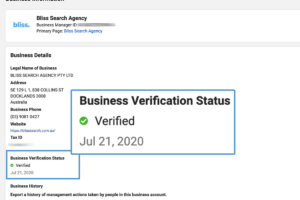
Security oversight is a leading but overlooked cause of permanent bans:
- Shared access with unmanaged partners
- Unverified Business Manager
- Payment method issues (chargebacks, unverified cards)
- Inconsistent admin roles
Meta deprecates accounts with suspicious access patterns to protect users. Even an expert’s account can be flagged if access patterns look anomalous based on historical benchmarks.
6. Mismanagement of Appeals and Support Channels
Experienced media buyers sometimes exhaust appeal opportunities by submitting low-quality or repetitive appeals. Meta limits appeal submissions when:
- The same reason is cited repeatedly
- Meta notes no new evidence in follow-ups
- Responses are generic or fail to address the specific policy issue
High-quality, policy-specific appeals are critical. Experts who lack structured documentation or fail to reference exact policy language often lose appeals permanently.
7. Industry Statistics and Risk Landscape
While Meta does not publish comprehensive enforcement metrics, industry research shows:
- Up to 12–15% of ad accounts are restricted at least once per year
- Repeat account restrictions increase by 35–50% after initial suspension without remediation
- Automated policy enforcement accounts for over 70% of initial disapprovals
These figures underscore that experience alone is not sufficient without strict policy compliance and account governance.
Conclusion
Experienced media buyers continue to face permanent Facebook ad account restrictions due to complex, evolving policy enforcement, automated machine learning systems, account behavior signals, and oversight in landing page compliance or appeal quality. Expertise in campaign strategy must be matched with rigorous compliance protocols, structured account governance, and proactive risk management.
For advanced practitioners, protecting account health is as important as campaign performance optimization. Only through disciplined compliance, coupled with strategic execution, can media buyers sustainably scale Facebook Ads while minimizing the risk of permanent account restrictions.