
Creating multiple Facebook accounts may seem like a quick workaround for advertising limits, account bans, or scaling campaigns, but in reality, it is one of the fastest ways to trigger Facebook’s automated enforcement systems. For professionals working deeply with Facebook Ads accounts, Business Manager structures, and large-scale media buying, understanding what actually happens behind the scenes is critical to protecting assets and maintaining long-term account health.
Facebook’s Policy Stance on Multiple Accounts
Facebook’s Terms of Service clearly state that each individual is allowed to maintain only one personal Facebook profile. This profile acts as the root identity that owns or manages Business Managers, Ad Accounts, Pages, and Pixels. Creating multiple personal profiles, even if they appear legitimate on the surface, is classified as a policy violation, regardless of intent. Facebook does not differentiate between “testing accounts,” “backup profiles,” or “client-specific profiles.” All are treated equally by enforcement systems.
From an advertising perspective, this policy exists to prevent abuse, fraud, and circumvention of ad restrictions. According to Meta’s transparency reports, millions of fake or duplicate accounts are removed every quarter, largely through automated detection systems.
How Facebook Detects Multiple Accounts
Facebook uses a multi-layered detection framework that goes far beyond IP address tracking. Advanced signals include browser fingerprinting, device identifiers, operating system patterns, behavioral similarities, login timing, and even interaction consistency across sessions. For example, logging into several Facebook accounts from the same device, even with different browsers or incognito modes, significantly increases the risk score.
In advertising environments, shared assets such as the same credit card, PayPal account, business address, domain, or Facebook Pixel can quickly link accounts together. Once a link is established, enforcement often propagates across the entire asset network, impacting Business Manager trust scores and ad delivery eligibility.
Immediate and Long-Term Consequences
In the short term, newly created duplicate accounts are often flagged within days or even hours. Common outcomes include identity verification requests, temporary feature blocks, or outright account disablement. When Facebook requests identity confirmation, failure or delay often leads to permanent suspension.
Long-term consequences are more severe for advertisers. If a personal profile managing multiple ad accounts is disabled, all connected Business Managers and Ad Accounts can be restricted. This can result in ad accounts being permanently banned, loss of historical data, disabled pixels, and rejected payment methods. Industry case studies indicate that recovery success rates after such enforcement actions are typically below 20%, especially when policy abuse patterns are clear.
Impact on Facebook Ads Performance and Trust Score
Facebook assigns internal trust metrics to profiles and Business Managers, commonly referred to by advertisers as “account quality” or “trust score.” Attempting to create or operate multiple personal profiles drastically lowers this score. Low-trust profiles experience higher ad rejection rates, slower ad approvals, limited daily spend thresholds, and increased likelihood of manual reviews.
For high-spend advertisers, this directly affects campaign scalability. A Business Manager associated with suspicious profile activity may struggle to scale beyond low daily budgets, even when ads fully comply with policy and show strong performance metrics.
Common Myths About Managing Multiple Accounts
A widespread misconception in the Facebook Ads community is that using VPNs, proxies, or anti-detect browsers fully protects multiple accounts. While these tools may delay detection, they do not eliminate it. Facebook’s machine learning systems analyze long-term behavioral patterns rather than single-session data. Over time, inconsistencies in human behavior, asset reuse, and operational workflows expose artificial separation.
Another myth is that businesses can legally create multiple personal profiles for team members who are not real individuals. This is also prohibited. Facebook explicitly requires that profiles represent authentic people, not roles, departments, or agencies.
Best Practices for Advertisers and Agencies
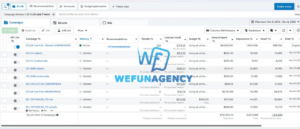
Instead of creating multiple Facebook accounts, professionals should leverage Facebook’s official infrastructure. Business Manager allows the creation of multiple Ad Accounts under a single verified business entity. Large advertisers can request higher ad account limits, daily spend increases, or access to agency ad accounts that are designed for scale.
For agencies, assigning employees or freelancers as partners or admins using their real profiles is the compliant and sustainable approach. This structure preserves account integrity while enabling operational flexibility.
Conclusion
Attempting to create multiple Facebook accounts is not a scalable or sustainable strategy, especially for serious advertisers and Facebook Ads experts. While it may appear to solve short-term problems, it almost always leads to greater risk, asset loss, and reduced advertising performance. Understanding Facebook’s detection mechanisms, trust-based systems, and policy enforcement is essential for protecting Business Managers, Ad Accounts, and long-term campaign scalability. For professionals in the Facebook Ads ecosystem, compliance is not a limitation; it is a competitive advantage.