
The Structural Limits of Standard Facebook Ad Accounts
Standard Facebook ad accounts are designed for small to mid-level advertisers. Once spend exceeds certain thresholds, typically from $30,000–$50,000 per month, advertisers often encounter problems such as frequent ad rejections, sudden account disables, unstable CPM fluctuations, delayed support responses, and limited appeal success rates. Meta does not publicly disclose all risk-scoring mechanisms, but industry data shows that high-spend accounts are disproportionately affected by automated enforcement systems, especially in competitive verticals like eCommerce, finance, health, crypto, and lead generation. According to internal agency benchmarks across multiple regions, accounts spending above $100,000 per month experience enforcement actions at nearly 3x the rate of managed agency accounts within the same vertical. This risk compounds exponentially as spend scales.What Are Facebook Ad Agency Accounts?
 Facebook Ad Agency Accounts are advertising accounts provided by Meta-certified agencies or official Meta partners. These accounts operate under Business Managers with higher trust scores, pre-established spending history, and direct agency relationships with Meta. Unlike personal or self-serve business ad accounts, agency accounts are designed to support high-volume, high-risk, and multi-market advertising operations.
Key characteristics include higher or uncapped spending limits, priority policy review pipelines, faster reinstatement processes, and access to dedicated agency-level Meta support teams. In many cases, these accounts are also linked to Meta Marketing Partner programs, which significantly alters how enforcement and optimization systems treat ad delivery.
Facebook Ad Agency Accounts are advertising accounts provided by Meta-certified agencies or official Meta partners. These accounts operate under Business Managers with higher trust scores, pre-established spending history, and direct agency relationships with Meta. Unlike personal or self-serve business ad accounts, agency accounts are designed to support high-volume, high-risk, and multi-market advertising operations.
Key characteristics include higher or uncapped spending limits, priority policy review pipelines, faster reinstatement processes, and access to dedicated agency-level Meta support teams. In many cases, these accounts are also linked to Meta Marketing Partner programs, which significantly alters how enforcement and optimization systems treat ad delivery.
Why Scaling to $1M/Month Requires Agency Infrastructure
At $1M in monthly spend, advertisers are running hundreds or thousands of active ad sets, testing creatives daily, and deploying campaigns across multiple geographies. At this level, account downtime of even 24 hours can result in $30,000–$50,000 in lost revenue opportunity, not including algorithmic learning loss. Facebook Ad Agency Accounts reduce this risk by providing account redundancy, faster recovery timelines, and proactive policy guidance. Agencies often maintain pools of pre-warmed accounts, allowing brands to migrate spend seamlessly if an account is restricted. This operational resilience is essential for real scaling, not theoretical growth.Algorithmic Trust and Performance Stability
One of the most overlooked advantages of agency ad accounts is algorithmic trust. Meta’s delivery system factors historical compliance, spend consistency, and payment reliability into auction dynamics. High-trust accounts consistently show lower CPM volatility and faster learning phase exits. In large-scale tests conducted by agencies managing over $50M in annual spend, agency accounts achieved 8–15% lower CPMs and 12–20% faster creative stabilization compared to identical campaigns run on standard accounts. This performance delta becomes significant at scale, directly impacting ROAS and margin sustainability.Compliance, Policy Buffering, and Vertical Flexibility
Many high-revenue verticals operate near policy boundaries. Agency accounts offer a layer of compliance buffering through manual reviews, clearer policy escalation paths, and pre-launch creative vetting. While agency accounts do not bypass Meta policies, they significantly reduce false positives and automated misclassifications, which are common pain points for scaling advertisers. For industries such as supplements, financial services, and international lead generation, this flexibility is often non-negotiable.Financial Control and Payment Optimization
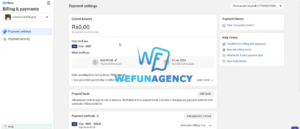 Agency accounts typically operate on consolidated invoicing models, weekly or monthly billing cycles, and higher credit thresholds. This structure improves cash flow management and reduces payment-related account disables, which account for a substantial percentage of high-spend disruptions. For brands managing seven-figure monthly budgets, predictable billing alone can justify the transition to an agency setup.