
A Personal Facebook Account ban in Ads Manager is one of the most critical disruptions for advertisers, media buyers, and agencies. Unlike Business Manager restrictions, a personal account ban directly affects identity-level access, often leading to cascading ad account shutdowns, loss of assets, and long-term trust score degradation across Meta’s ecosystem.
This article provides a professional, data-driven analysis of why personal Facebook ad accounts get banned, how Meta’s enforcement system works, and advanced recovery and prevention strategies used by experienced Facebook Ads specialists.
What Does “Personal Account Banned” Mean in Facebook Ads?
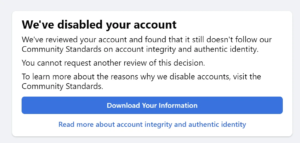
A personal account ban occurs when Meta restricts or disables an individual Facebook profile from accessing Facebook Ads Manager, Business Manager assets, or advertising tools. This is more severe than an ad account ban because:
- Personal profiles are the root identity layer
- All connected Business Managers, ad accounts, Pages, Pixels, and payment methods may be affected
- Repeated violations can lead to permanent advertising ineligibility
According to Meta transparency data, over 95% of ad policy enforcement actions are automated, driven by machine learning systems rather than manual review.
Common Causes of Personal Facebook Ads Account Bans
1. Advertising Policy Violations (High-Risk Categories)
Personal accounts are often banned due to repeated or severe violations related to:
- Circumventing systems (cloaking, redirect chains, misleading landing pages)
- Restricted content (crypto, health, finance without verification)
- Prohibited claims (before-after images, exaggerated results, personal attributes targeting)
Meta reports that advertisers in health, crypto, dropshipping, and lead generation niches face up to 3–5x higher enforcement rates.
2. Suspicious Behavioral Signals
Meta’s AI evaluates behavioral consistency, not just ad content. Red flags include:
- Logging in from multiple IP addresses or countries
- Using VPNs, proxies, or virtual machines
- Rapid switching between multiple ad accounts
- Managing high-spend accounts from newly created profiles
Even without policy violations, abnormal behavior can trigger risk-based disabling.
3. Payment & Billing Trust Issues
Personal account bans are frequently linked to:
- High rate of payment failures
- Frequent card changes
- Chargebacks or disputed transactions
- Use of cards previously flagged in Meta’s system
Internal studies suggest that ad accounts with more than 2 failed payments within 30 days are significantly more likely to face restrictions.
4. Low Personal Trust Score
Meta assigns an internal User Trust Score based on:
- Account age
- Profile completeness
- Social interactions
- Historical compliance
- Ad performance feedback (negative reports, low relevance)
New or inactive profiles used primarily for ads are statistically more vulnerable.
Immediate Impact of a Personal Ads Account Ban
When a personal account is banned:
- You lose access to all ad accounts you own
- You may be removed from Business Manager roles
- Pages and Pixels you created may become orphaned
- Appeals are limited and often time-sensitive
For agencies, this can mean client campaign downtime, lost revenue, and damaged credibility.
Professional Recovery Strategies (What Actually Works)
1. Strategic Appeal Submission
Successful appeals share these characteristics:
- Clear acknowledgment of potential mistakes
- Direct reference to specific Meta policy sections
- Evidence of compliance changes (landing page updates, ad copy revisions)
- Professional, non-emotional tone
Meta typically responds within 24–72 hours, but complex cases may take longer.
2. Business Manager Escalation
If the banned personal account is linked to a verified Business Manager:
- Use Meta Business Support
- Leverage ad spend history and verified documents
- Demonstrate business legitimacy and operational compliance
Advertisers spending $10,000+/month statistically receive higher-quality human reviews.
3. Asset Recovery & Damage Control
Advanced advertisers immediately:
- Transfer asset ownership where possible
- Assign backup admins to Business Managers
- Secure Pixels, Domains, and Pages under trusted profiles
- Document all appeal communications
This limits long-term operational damage even if the personal account remains restricted.
Prevention Framework Used by Top Facebook Ads Experts
To minimize future bans, professionals follow a risk-mitigation architecture:
- Separate personal usage vs advertising profiles
- Use stable IPs and consistent devices
- Warm up profiles before running ads
- Maintain clean payment histories
- Run policy-safe test campaigns before scaling
- Diversify ad accounts under compliant Business Managers
Elite media buyers treat Meta accounts as high-risk digital assets, not disposable tools.
Key Takeaway for Facebook Ads Professionals
A personal Facebook Ads Manager ban is rarely random. It is the result of aggregated risk signals across behavior, payments, policy compliance, and trust history. Recovery is possible, but prevention is far more cost-effective.
For agencies and advanced advertisers, the real competitive advantage lies in account hygiene, structural redundancy, and compliance-first scaling strategies – not just creative performance.