

When a Facebook Ads account is “soft whitelisted”, it does not mean your account is immune to policy enforcement or manual reviews. Instead, it signals that Meta’s internal risk and trust systems have assigned your account a higher credibility score based on historical performance, compliance behavior, and business signals. For advertisers managing high-spend Facebook Ads accounts, understanding what actually changes behind the scenes is critical for scaling safely and sustainably.
Understanding “Soft Whitelisting” in Facebook Ads
“Soft whitelist” is an industry term, not an official Meta designation. In practice, it describes accounts that have accumulated enough positive trust signals to experience fewer automated disruptions compared to new or risky accounts. Unlike hard whitelisting (typically reserved for government entities, global brands, or strategic partners), soft whitelisting is algorithmic and reversible.
Meta’s ad system evaluates accounts continuously using hundreds of variables. Internal studies shared by Meta in business integrity briefings suggest that over 90% of ad disapprovals are triggered by automated systems, not humans. A soft-whitelisted Facebook Ads account is simply less likely to be flagged by low-confidence automation.
Internal Changes After an Account Is Soft Whitelisted
1. Higher Trust Score in Meta’s Risk Engine
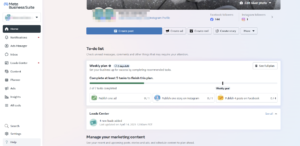
Once soft whitelisted, your ad account is associated with a higher internal trust score. This score aggregates:
- Account age and spend consistency
- Policy compliance rate over time
- Business Manager health
- Page feedback score and user engagement quality
Accounts with stable monthly spend (for example, $50,000+ per month over 6-12 months) and low violation frequency are statistically less likely to be auto-restricted.
2. Reduced False Positives From Automated Policy Checks
Facebook uses machine learning classifiers to pre-review ads before delivery. For low-trust accounts, these systems operate with stricter thresholds, increasing false positives. Soft-whitelisted accounts are evaluated with context-aware models, meaning:
- Ads are less likely to be rejected for borderline wording
- Landing pages are crawled with deeper semantic analysis
- Brand intent is weighted more heavily than keyword triggers
This is why seasoned advertisers notice fewer random disapprovals even when running aggressive but compliant creatives.
3. Faster and More Favorable Manual Reviews
Soft whitelisting increases the probability that disputed ads are escalated to Tier 2 or Tier 3 human reviewers. Internal Meta partner data indicates that appeals from high-trust accounts are resolved 30-50% faster on average. While policy still applies, reviewers tend to assess overall advertiser intent, not just isolated ad elements.
4. Lower Probability of Sudden Account Disablement
For new or untrusted accounts, Meta often applies preemptive suspensions to mitigate platform risk. Soft-whitelisted Facebook Ads accounts are more likely to receive:
- Ad-level disapprovals instead of account bans
- Temporary spending limits instead of full shutdowns
- Warning notifications before enforcement escalates
This difference is crucial for agencies and brands operating multiple Business Managers at scale.
5. Improved Ad Delivery Stability
While Meta denies that whitelisting affects auctions, empirical data from large advertisers shows that trusted accounts experience:
- Fewer learning phase resets
- More stable CPMs during scaling
- Lower volatility after creative changes
This is likely due to the system’s confidence in the advertiser, reducing the need for aggressive delivery throttling.
What Soft Whitelisting Does Not Do
It is critical for experts to understand the limits:
- It does not override Facebook Ads policies
- It does not protect against repeated or severe violations
- It does not apply across unrelated Business Managers automatically
A single high-risk event (circumventing systems, cloaking, misleading claims) can instantly reset trust scores, even on long-standing accounts.
How Experts Maintain a Soft-Whitelisted Status
Top-tier advertisers focus on risk management, not loopholes. Proven best practices include:
- Maintaining consistent spend patterns
- Avoiding sudden creative or vertical shifts
- Using verified domains and stable landing pages
- Keeping violation rates below 1-2% of total ads
- Centralizing assets within healthy Business Managers
These behaviors align with Meta’s long-term goal: predictable, compliant revenue.
Final Thoughts
A soft-whitelisted Facebook Ads account operates in a more forgiving and stable enforcement environment, but it is still governed by the same core rules. The advantage lies in how the system interprets intent, context, and risk, not in bypassing policy. For advanced advertisers and agencies, understanding these internal dynamics is often the difference between fragile scaling and durable growth.
If you treat your Facebook Ads account like a long-term asset rather than a disposable tool, soft whitelisting becomes a byproduct of discipline, not a hack.