
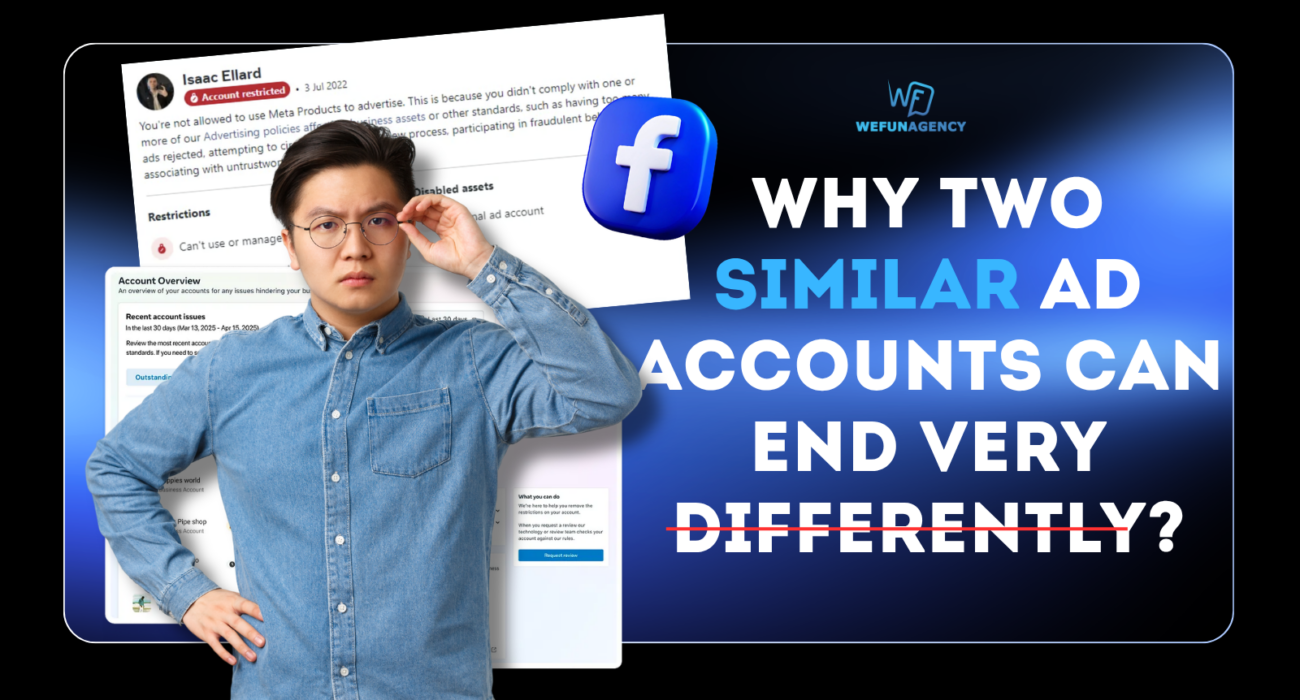
At first glance, two Facebook Ads accounts can appear nearly identical. They may operate in the same niche, target similar audiences, run comparable creatives, and even spend at similar budget levels. Yet over time, one account scales profitably while the other gets restricted, suffers from poor delivery, or fails to maintain consistent ROI. This divergence is not random, it is the result of a complex interaction between algorithmic trust, behavioral signals, and strategic execution.
Understanding why this happens requires looking beyond surface-level metrics and into the deeper mechanics of how a Facebook Ads Account is evaluated within the platform ecosystem.
The Hidden Variable: Account Trust Score
One of the most underestimated factors in Facebook advertising is what many media buyers refer to as the “account trust score.” While not publicly disclosed, it is widely understood that Facebook assigns a dynamic level of trust to each ad account based on historical behavior. This includes compliance history, user feedback, payment reliability, and even patterns of campaign structure.
Two accounts running the same campaign can yield drastically different CPMs and delivery stability if one has a stronger trust profile. For example, internal case studies from performance agencies often show CPM differences of 20-40% between high-trust and low-trust accounts, even when targeting identical audiences.
An account with a clean history, consistent spending patterns, and low policy violations tends to benefit from more stable delivery and better auction positioning. On the other hand, an account that frequently edits ads, triggers disapprovals, or shows erratic spending behavior may face limited reach or higher costs.
Learning Phase Sensitivity and Optimization Signals
Another key factor is how each account navigates the Learning Phase. Facebook’s algorithm relies heavily on conversion data to optimize delivery. However, not all accounts feed the algorithm with equal quality signals.
If one account consistently achieves 50+ optimized events per week per ad set, it exits the Learning Phase efficiently and stabilizes performance. Meanwhile, a similar account with fragmented campaign structures or inconsistent conversion tracking may remain stuck in Learning Limited status, leading to higher CPA and unstable results.
Moreover, signal quality matters as much as signal quantity. Accounts leveraging well-configured Facebook Pixel and Conversion API integrations tend to provide more accurate data, which improves optimization efficiency. In contrast, poor tracking setups can mislead the algorithm, even if the campaign setup appears identical on the surface.
Creative Fatigue vs. Creative Strategy
Creative is often cited as the biggest driver of performance, but the difference lies not just in the asset itself, but in how it is managed. Two accounts may use similar creatives, yet one systematically refreshes and tests variations while the other relies on static assets.
Data from large-scale advertisers suggests that ad fatigue can increase CPA by up to 30% after frequency surpasses 2.5-3.0 in many verticals. Accounts that actively rotate creatives, test hooks, and iterate messaging maintain engagement and relevance scores, which directly influence auction competitiveness.
In contrast, accounts that neglect creative iteration often see declining CTR (Click-Through Rate) and rising CPM, even if the initial performance was strong.
Audience Overlap and Auction Competition
Even when targeting appears similar, subtle differences in audience structure can lead to vastly different outcomes. Audience overlap within the same account or even across multiple accounts managed by the same business can create internal competition, driving up costs.
Additionally, accounts that rely too heavily on narrow targeting may limit the algorithm’s ability to find efficient conversions. Broad targeting strategies, when combined with strong creatives and conversion signals, often outperform highly segmented setups in today’s algorithm-driven environment.
This explains why two accounts targeting the “same audience” can still experience different delivery dynamics because the algorithm interprets and expands those audiences differently based on historical performance.
Policy Compliance and Risk Signals
Compliance is not just about avoiding ad disapproval, it directly impacts account longevity and scalability. Accounts operating in sensitive verticals such as Business Help (BH), White Hat (WH), or Gray Hat (GH) environments often carry different levels of inherent risk.
Even minor policy violations can accumulate and affect account stability. For instance, repeated disapprovals or flagged landing pages can reduce delivery priority or lead to account restrictions. Meanwhile, a similar account with stricter compliance discipline can scale aggressively without interruption.
Industry observations indicate that accounts with frequent policy issues are significantly more likely to face sudden spend drops or full account shutdowns, regardless of their past performance metrics.
Payment Behavior and Spending Patterns
Facebook also evaluates financial behavior as part of its risk assessment. Accounts with consistent billing, verified payment methods, and gradual budget scaling tend to build stronger credibility.
On the other hand, sudden spikes in ad spend especially from new or low-trust accounts can trigger risk flags. This often results in temporary delivery limitations or additional review processes.
A common scaling best practice is to increase budgets incrementally (typically 20–30% per day) rather than making aggressive jumps, which helps maintain algorithmic stability.
Infrastructure and Account Environment
Beyond the ad account itself, the broader infrastructure plays a critical role. This includes Business Manager quality, domain verification, page history, and even user access behavior.
Two ad accounts may look identical in Ads Manager, but if one is backed by a well-established Business Manager with verified assets and consistent admin activity, it will generally outperform an account operating in a less stable environment.
This is particularly relevant in agency setups or when using rented accounts, where the underlying infrastructure can vary significantly in quality.
Conclusion: Similar Inputs, Different Systems
The idea that two similar Facebook Ads accounts should produce similar results is a misconception. In reality, each account operates within its own micro-environment shaped by trust signals, historical data, optimization quality, and strategic execution.
Success in Facebook advertising is not just about campaign setup, it is about managing the entire ecosystem surrounding the account. From maintaining compliance and optimizing data signals to evolving creative strategy and scaling responsibly, every detail contributes to long-term performance.
For advertisers aiming to achieve consistent and scalable results, the focus should shift from replicating tactics to understanding the underlying system dynamics. Because in Facebook Ads, small differences in execution can compound into dramatically different outcomes over time.
If you’re looking to build a more stable and scalable advertising setup, or facing challenges with your current infrastructure, WeFun Agency is always ready to help. Reach out to our team anytime for fast support, reliable solutions, and expert guidance to keep your campaigns running smoothly.